
Food, Scarcity, and Care
Chanson douceFood moves from Louise’s history of deprivation into her caregiving, becoming both a language of affection and a site of conflict.
increasing Bearing strength in each event
 decreasing
Bearing strength in each eventdecreasingThe Taste of Leftovers

Hunger in Memory
A childhood of scraps
Louise remembers eating reheated soup and the remains of other people’s meals. Food carries the taste of being given whatever was left rather than something prepared for her.
Scarcity persists
Even as an adult worker in comfortable homes, Louise retains an intense aversion to waste. Her thrift is not merely a habit; it is an embodied memory of having too little.
Food as Competence
Feeding the Household
A caregiver’s craft
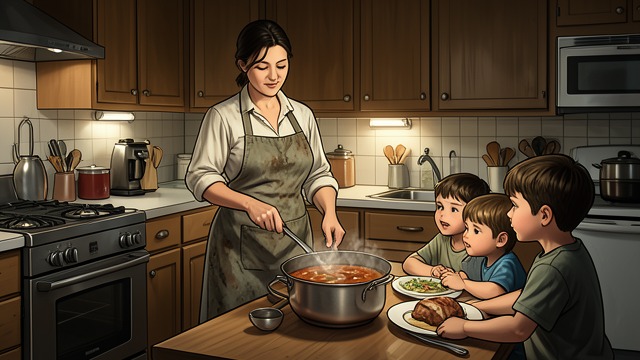
Louise cooks meals that the children eat and that Paul praises. Friends admire the dinners she prepares, and the family’s social life becomes easier around her table.
Appreciation has limits
Food makes Louise visible as a talented worker, but the praise remains tied to service. Her care is celebrated without ensuring that her needs or private history receive comparable attention.
The Honey Cakes

Wafa Offers Something
A small act of hospitality
Wafa offers Louise honey cakes and explains that she comes from a culture of sharing food with strangers. Louise declines at first, but the gesture opens their conversations.
Nourishment as connection
Food creates a form of welcome that is not mediated by an employer. The scene contrasts Wafa’s informal generosity with Louise’s habitual position as the person who feeds others.
The Chicken as Protest
An Object Made Charged
Refusal to discard
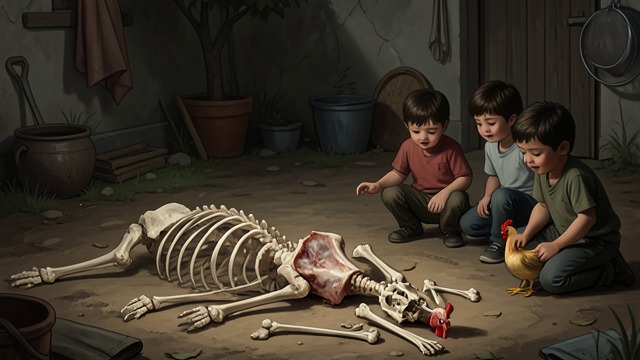
After Myriam throws away unsafe chicken, Louise has the remains carefully cleaned and leaves the carcass where the family will find it. The children remember it as a game involving bones and treats.
Different readings
Myriam experiences the skeleton as an accusation or threat, while the children recall play. The same food carries the competing meanings of care, thrift, authority, and revenge.
Cooking for Herself
A Rare Reversal
Louise receives care
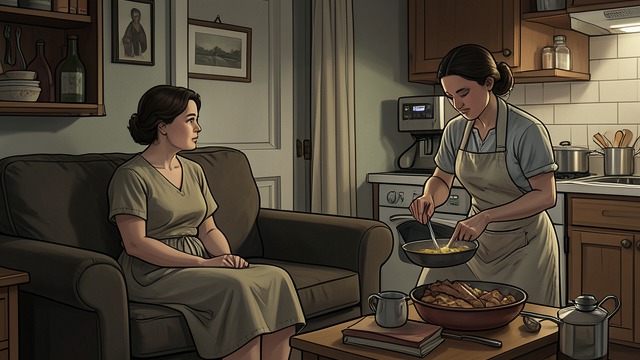
Wafa cooks in the Massé kitchen while Louise watches from the sofa. Louise remembers that she has rarely seen anyone prepare a meal solely to please her.
A fragile alternative
For a moment, care is reciprocal rather than a service Louise must provide. The meal suggests the human comfort she lacks, but the companionship does not resolve her financial or emotional insecurity.
Louise’s childhood memories, recalled in summer
The first weeks in the Massé home
A winter afternoon at the square
The evening Myriam returns late
During Wafa’s summer visit
